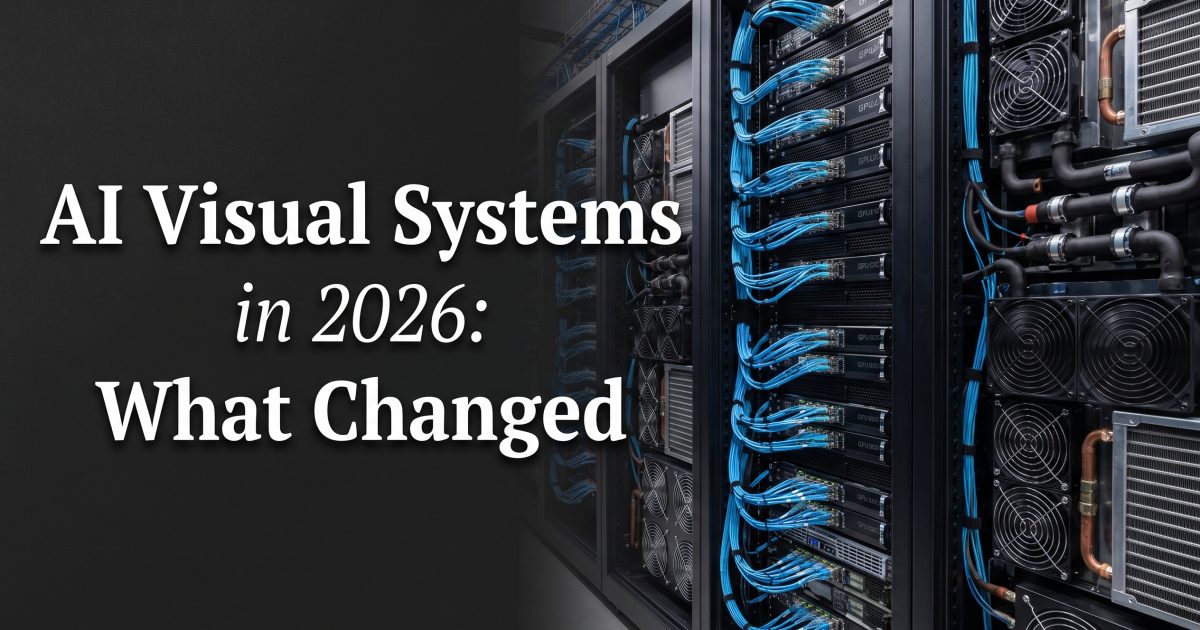
AI visual systems are moving from one-off prompt experiments to controlled production inputs. A useful visual system can reserve room for copy, accept a reference, hold a composition across revisions, and create an asset close enough to enter a real workflow. That does not make generated pixels a source of truth. It changes where teams spend their time: less on blank-canvas exploration, more on review, verification, and finishing.
Why AI visual systems matter to infrastructure teams
Image generation used to be mostly a mood-board tool. A team could describe a GPU rack, a cooling plant, or an edge enclosure, then pick the most convincing frame. That approach breaks down when the image must fit a landing-page hero, a product brief, or a technical explainer with fixed copy zones. The job is no longer simply to make an attractive image. It is to produce a repeatable visual component with constraints.
That distinction matters to developers. A generated visual can now sit behind a content service, a review queue, and a deterministic compositor. The model supplies the high-variance work: lighting, materials, camera angle, and concept exploration. Code and design tooling supply the hard guarantees: approved text, brand fonts, accessibility, crop rules, and data labels. This is a better boundary than asking a model to render a complete, final diagram without inspection.
The relevant success metric is not whether an image looks impressive at full screen. It is the rejection rate after a reviewer checks it at its intended size. A batch that produces four usable concepts from ten attempts changes a design workflow. A batch that produces one usable concept from 100 attempts does not, even if the one winner looks excellent.
Layout is now an input for AI visual systems
Recent image tools expose more control through reference images, aspect-ratio selection, in-image text requests, and explicit spatial instructions. Google documents support for combining up to 14 reference images in its image-generation workflow, which shows how far the interface has moved beyond a single text field. Google AI for Developers documents the reference-image limit and supported aspect ratios. The number is not a guarantee of perfect identity or typography, but it gives teams a way to pass visual context into a run.
For a practical prompt, define the asset slot before defining the subject. Specify the canvas ratio, the safe area, the empty zone, the dominant object, and the prohibited visual clutter. For example: “16:9 infrastructure hero; GPU cabinet on the right third; dark negative space on the left 40 percent for HTML copy; no readable labels; cool aisle lighting; single focal plane.” The request gives the model a composition problem with boundaries instead of an open-ended art direction brief.
Teams should keep the copy outside the generated image whenever possible. Browser text remains searchable, selectable, translatable, and accessible to screen readers. It also survives a late wording change. Use model-rendered type for texture or a deliberately decorative headline. Use a normal layout system for product names, metrics, pricing, compliance language, and navigation.
Inference is part of the design
The visual result is only one side of the system. Image models consume GPU time, memory bandwidth, storage, and queue capacity. That makes the serving path a product concern. If a creative tool accepts many concurrent jobs, the platform needs a clear latency target, a maximum queue age, cancellation behavior, and an audit trail for the inputs and outputs.
Optimization work has real consequences here. NVIDIA reports that 8-bit post-training quantization for diffusion models delivered up to 1.45x speedup on RTX 6000 Ada and 1.35x on L40S in its published tests. The TensorRT Model Optimizer write-up also describes quantization and sparsity as deployment tools, not visual-quality features. Those figures are vendor benchmarks, not a promise for every model or pipeline. They still illustrate why a production image endpoint needs profiling instead of assumptions.
Measure at least four things: time to first preview, total generation time, GPU-seconds per accepted asset, and acceptance rate after review. Add dimensions and aspect ratio to every record. A 1024-pixel square image and a 2496-by-1664 image do not represent the same service load. Neither does a fresh generation and a reference-guided edit. Without those fields, a dashboard can hide the cost of the requests users value most.
Batching needs care. It can raise accelerator utilization when several compatible jobs arrive together, but it can also make an interactive editor feel slow. Separate an interactive lane from a bulk lane. Put a ceiling on batch wait time. Return a low-resolution preview if the model supports it, then complete the high-resolution job. These choices often matter more to a user than a small improvement in average GPU utilization.
Two model tests: composition and bounded diagrams
Seedream V5 Pro Uncensored makes the composition shift easy to see. Its documented controls include 1K and 2K output tiers, eight aspect ratios, and up to 10 optional reference images. A test prompt asked for a GPU-rack poster with a fixed main headline area and a smaller production line. The output uses the rack as the visual anchor and treats the text region as a deliberate part of the composition rather than an afterthought.
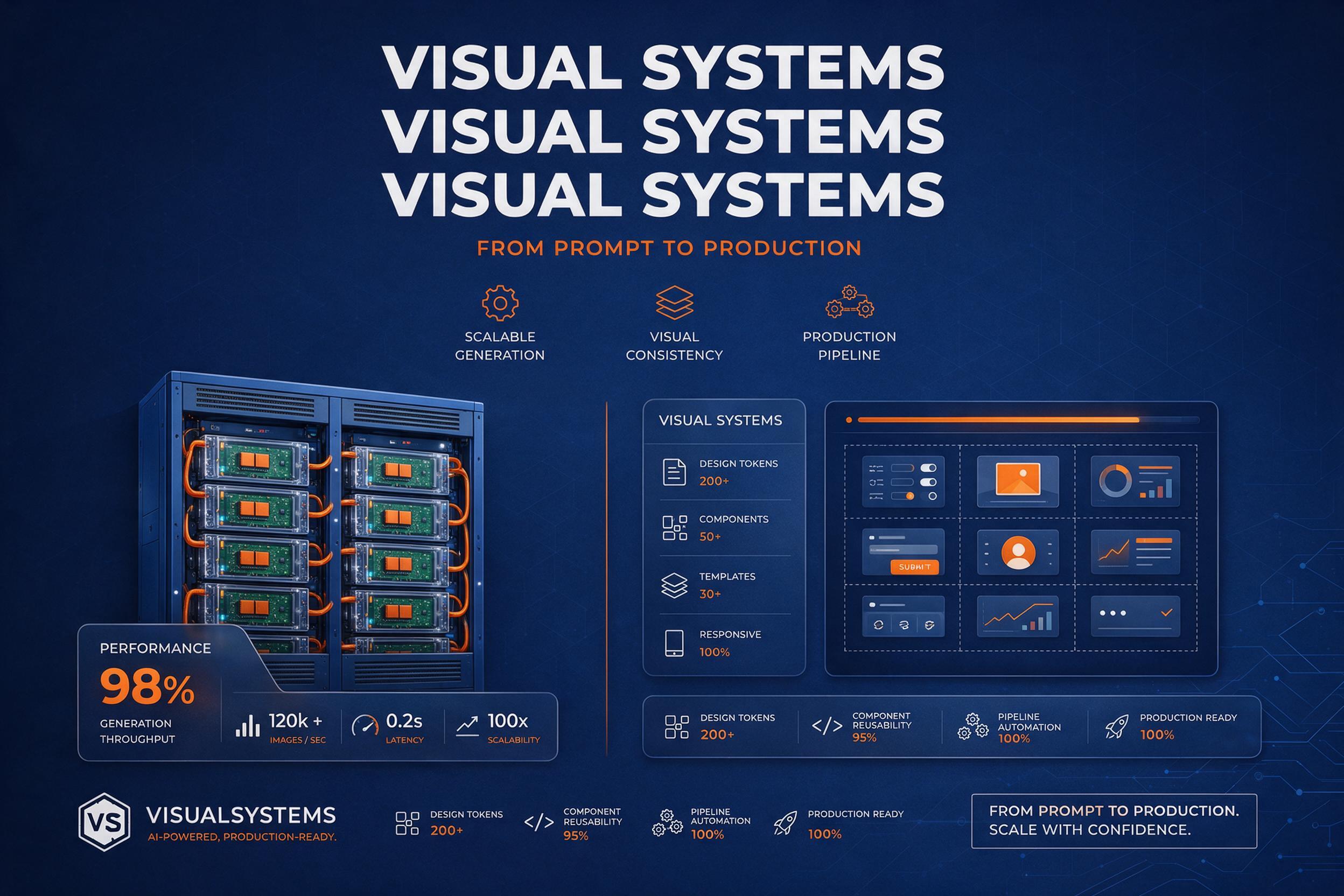
That is useful for a known asset slot. It does not mean every generated letter is ready to ship. At small display sizes, one malformed character can make a hero image look careless. The productive pattern is to use the model for the cabinet, lighting, depth, and reserved space, then add approved copy as HTML or in a design tool. This preserves fast exploration without handing exact language to a probabilistic renderer.
SenseNova U1-8B Text-to-Image was tested with a three-stage infrastructure infographic: PROMPT, LAYOUT, and PRODUCTION, plus a GPU-server silhouette. The model offers 720P through 4K resolution choices and several wide and tall aspect ratios. The result shows why bounded language works better than a dense specification. A small label set, a clear stage order, and a spatial request give the model a realistic chance of producing a useful explanatory draft.
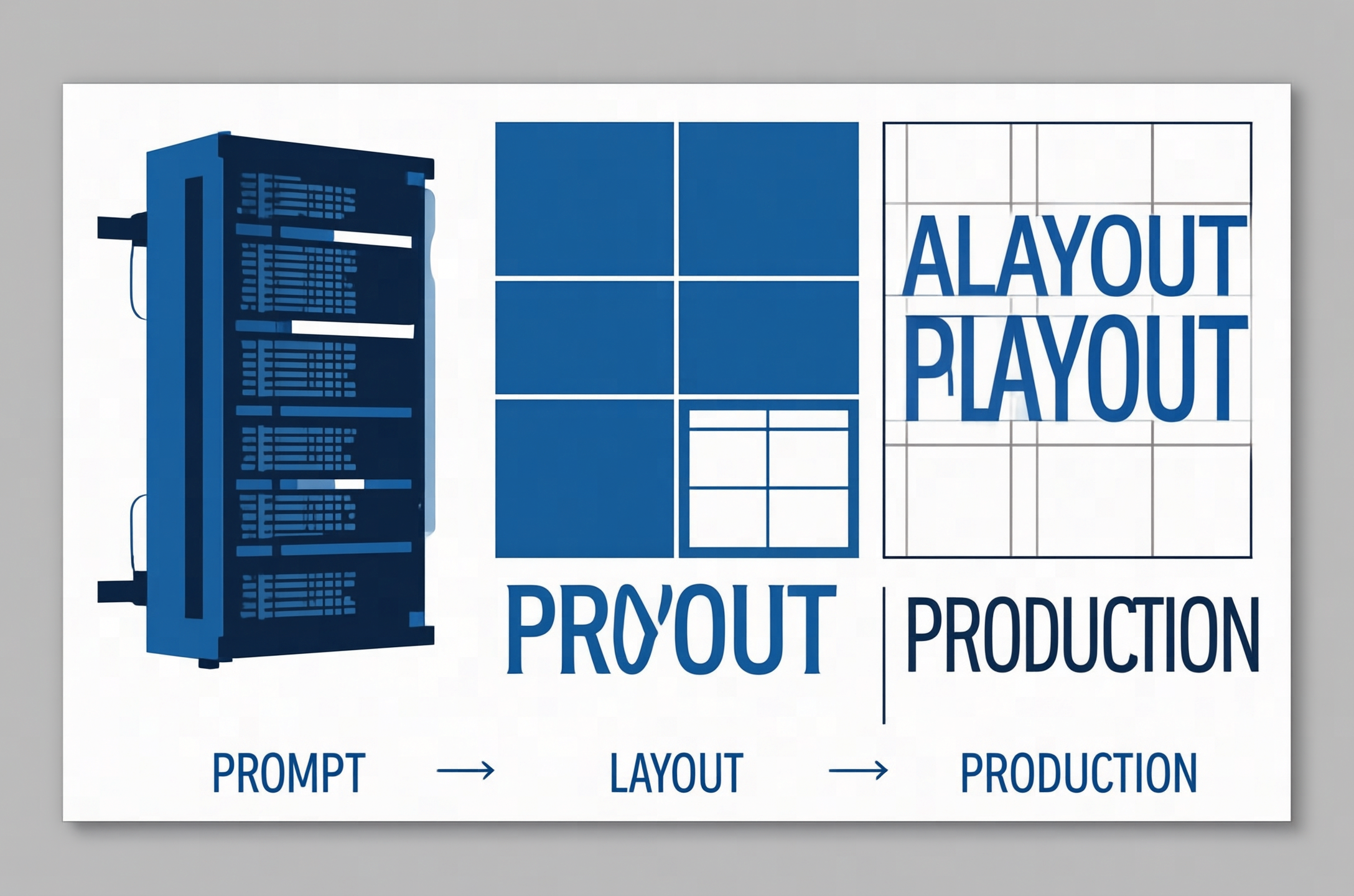
The limit is as important as the result. Generated diagrams should never establish latency values, topology edges, capacity figures, or safety instructions. Render those from structured source data. Treat the model output as a narrative sketch that helps a technical writer, designer, and engineer agree on the story before the verified diagram is built.
A production workflow that holds up
- Define the contract. Record aspect ratio, safe zones, target placement, allowed references, resolution, and review owner.
- Generate a small batch. Start with 4 to 10 candidates. More volume is not automatically more useful.
- Automate mechanical checks. Reject wrong dimensions, missing subjects, forbidden logos, and files that fail the delivery format.
- Run human review. Check anatomy, product fidelity, visual hierarchy, and accidental readable text.
- Apply deterministic finishing. Add copy, charts, labels, metadata, alt text, and crop variants outside the model.
- Log the outcome. Keep the model version, prompt template, reference IDs, generation settings, reviewer result, and final asset ID.
This workflow gives AI visual systems a clear role. They shorten the route from a written brief to an art-directed draft. They do not replace asset management, a component library, or an approval process. A versioned prompt template is especially valuable. It lets teams compare model updates against the same constraints instead of relying on anecdotal impressions.
Where to draw the line
Use generation for visual direction, spatial composition, material studies, and fast iteration. Use deterministic tools for exact text, diagrams, measurements, and regulated claims. That split reduces both rework and risk. It also keeps a persuasive image from masquerading as an accurate technical artifact.
The change in 2026 is practical: models are becoming easier to place inside a controlled asset pipeline. The winning teams will not treat that as a reason to remove review. They will treat it as a reason to design better interfaces between creative generation, infrastructure operations, and verified production output.
Run and scale models such as Seedream V5 Pro Uncensored and SenseNova U1-8B on Wiro.