
AI accelerator memory bandwidth has become a product decision, not a footnote beneath peak TOPS. Qualcomm positions its Dragonfly AI300 as a rack-level inference platform for agentic AI, with up to 414 TB/s of memory bandwidth per rack and 43 TB of LPDDR5X capacity per rack. Those numbers matter because production inference spends a large share of its time moving model weights, KV-cache state, and request data through the system.
That is the useful way to read the Dragonfly announcement. It is not a claim that one specification settles every accelerator comparison. It is a reminder that model serving is often constrained by data delivery. A processor with abundant arithmetic can still sit idle while memory fetches, cache traffic, or fabric transfers catch up.
AI accelerator memory bandwidth shapes decode throughput
Prefill and decode stress hardware differently. Prefill processes the incoming prompt and can use large matrix operations. Decode produces one or a few tokens at a time. For each decode step, the serving stack reads weights and attends over the accumulated KV cache. Batch size helps reuse weights, but it also increases cache pressure and can push latency beyond the service objective.
A simple roofline-style check helps. If a model needs to stream roughly 70 GB of weights for a decode step and the effective memory path delivers 1 TB/s, the theoretical floor for that read is about 70 ms before accounting for compute, cache behavior, and communication. The same calculation at 2 TB/s lands near 35 ms. Real systems do not reach the floor, but the direction is clear: tokens per second can be limited by bytes moved rather than operations available.
Capacity changes the operational picture too. It decides which weight quantization fits, how much KV cache remains after weights load, and how many concurrent sessions can stay resident. Long-context agents amplify this problem. Their histories, retrieval results, tool output, and intermediate messages create state that must be stored, reused, moved, or evicted. A fast accelerator with too little usable memory turns that state into a queueing problem.
What the Qualcomm Dragonfly AI300 figures imply
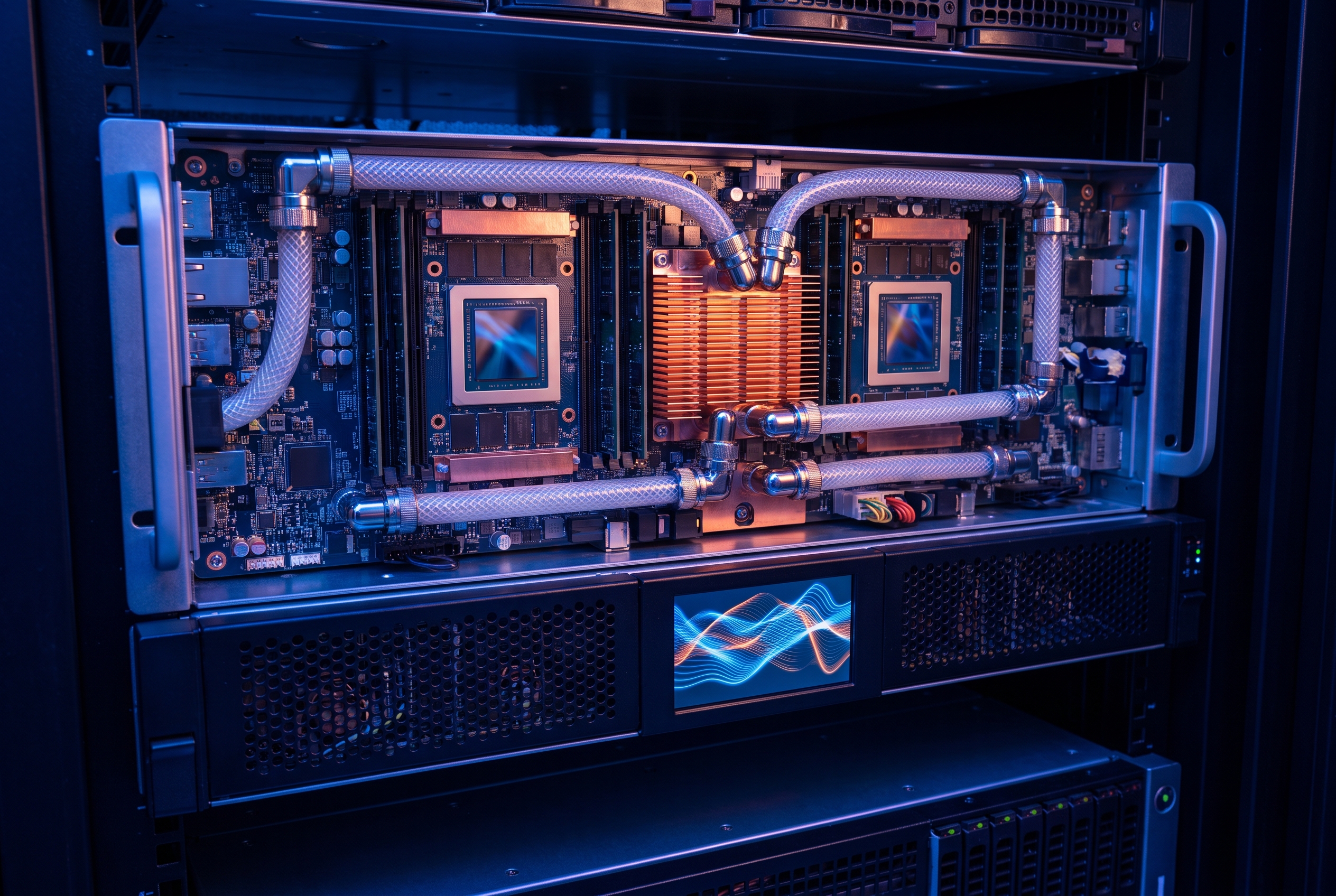
Qualcomm lists 414 TB/s of memory bandwidth and 43 TB of LPDDR5X capacity for an AI300 rack. Its data-center accelerator page also describes the AI300 as using HBC Gen 2 and claims 54 times the effective memory bandwidth of AI200. These are vendor specifications, not an application benchmark. They should be treated as a starting point for workload tests, especially because the definition of effective bandwidth depends on the architecture and data path.
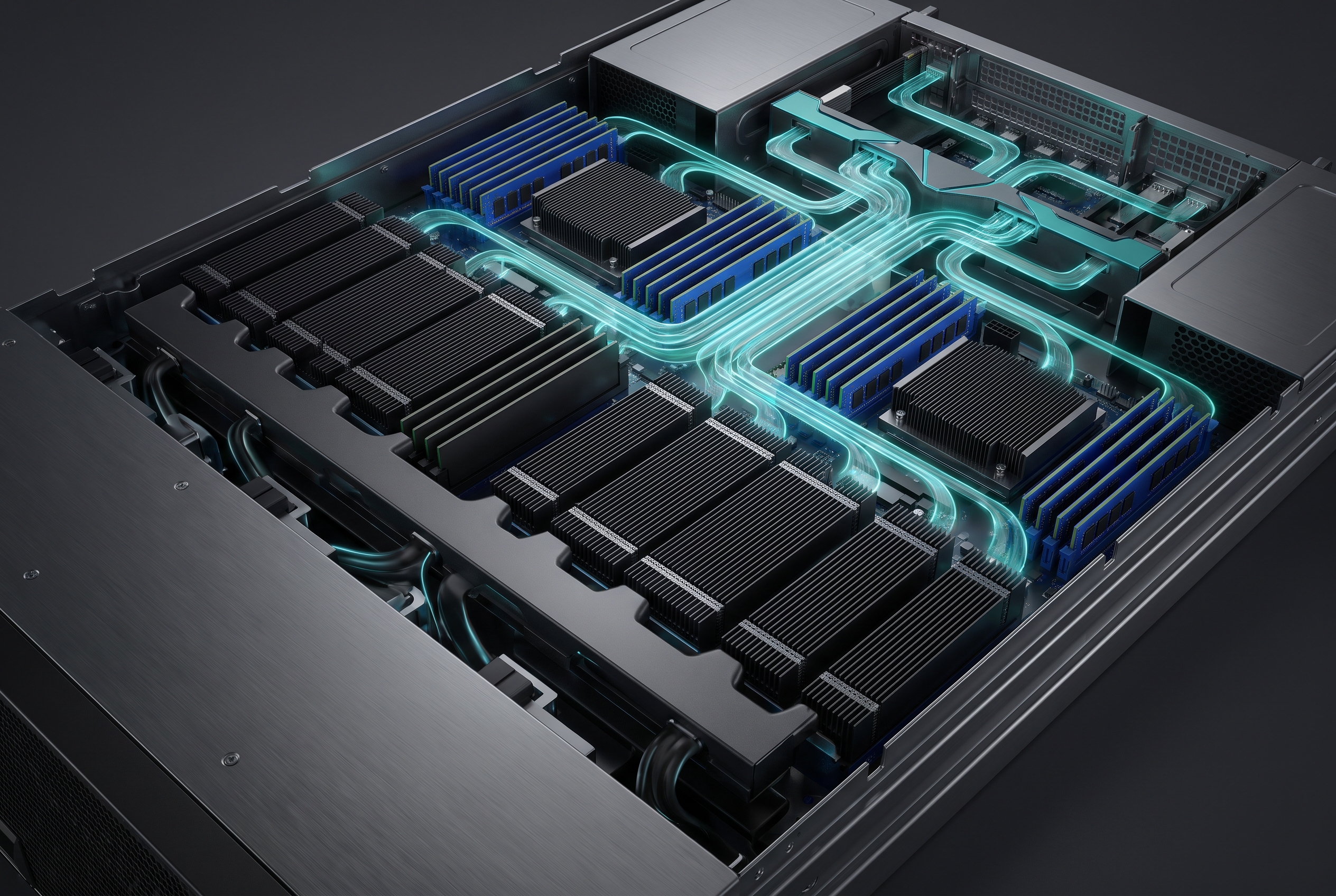
Still, rack-level figures are the right unit for infrastructure planning. Teams deploy a serving pool, not a single chip in isolation. They need to ask how much model state the full rack holds, how traffic crosses device boundaries, what happens during a node failure, and whether networking steals time from token generation. The AI300 roadmap also calls out air and direct-liquid cooling support. That affects density, power delivery, and which facilities can host the platform without redesigning an entire row.
Qualcomm says the AI300 targets four to eight times better performance per watt than the AI200. That is an architectural target rather than a measured result for every model. It becomes meaningful only when paired with a named model, context length, precision, batch policy, latency target, and system power measurement. Without those conditions, performance-per-watt is too broad to forecast fleet cost.
Inference is a data path, not just a compute block
Memory bandwidth does not operate alone. Host CPUs prepare requests, tokenizers and routers add work, storage supplies retrieved context, and the network carries requests and distributed cache state. NVIDIA makes the same system argument in its BlueField discussion: agentic workloads span GPUs, CPUs, memory, networking, storage, and security. Its BlueField-4 specification includes up to 800 Gb/s networking, while the surrounding platform reaches higher fabric speeds. The exact product differs, but the lesson holds: a bottleneck outside the accelerator can erase a better accelerator result.
For a distributed model, tensor-parallel communication can become visible in the tail. For a mixture-of-experts model, routing adds an all-to-all pattern. For retrieval-heavy agents, storage and network variability can dominate time to first token. For a heavily cached chat service, eviction policy and KV-cache placement may matter more than a headline compute figure. Each workload uses the memory hierarchy differently.
A practical evaluation plan for developers and infrastructure teams
Start with the model and the service-level objective. Pick representative prompts rather than a single synthetic sequence. Measure short chat, long-context chat, retrieval-augmented generation, and a tool-heavy agent flow. Record time to first token, inter-token latency, end-to-end task time, and p50, p95, and p99 values. A high aggregate token rate does not help a customer waiting behind a long prompt.
| Test | What it exposes | Useful metric |
|---|---|---|
| Fixed short prompts | Decode efficiency | Inter-token latency at p95 |
| Mixed 1K to 128K contexts | KV-cache pressure | Time to first token and eviction rate |
| RAG with live retrieval | Host, storage, and fabric stalls | End-to-end latency |
| Bursty concurrent sessions | Queueing and admission policy | p99 latency and rejected work |
| Power-capped rack | Fleet economics | Completed requests per joule |
Keep the software stack stable across comparisons. Use the same model revision, quantization, prompt mix, sampling settings, and routing policy. Log memory allocation, cache hit rate, network counters, and power at the rack boundary. If a platform needs a different parallelism strategy to achieve its best result, document that choice instead of hiding it. The implementation is part of the product.
Where the AI300 fits
Dragonfly broadens the inference-hardware market at a time when operators need more than one deployment shape. Some teams want maximum context per rack. Others need predictable low-latency decode across a large pool of smaller models. Others run agent systems where cache, network, and storage behavior decide the user experience. Qualcomm has put a clear stake in the first-order importance of memory delivery. The useful response is to test that claim against the actual request mix.
Read the Qualcomm Dragonfly AI300 product page, the Dragonfly accelerator overview, and NVIDIA’s BlueField system design analysis for the underlying platform context. Then measure the whole serving path: memory fit, bandwidth, cache behavior, network traffic, tail latency, and joules per completed task. Run and scale models with Wiro.