AI research automation is moving from polished demos into the operating loop of real laboratories. GPT-5.6 Sol matters because its strongest use case is not a single answer. It is a bounded cycle: inspect a state, choose a permitted action, call a tool, read the result, and decide whether to continue or escalate. That is the shape of a production workload, whether the instruments are quantum-control racks, a chip test station, or an internal engineering platform.
AI research automation needs more than a good chat response
OpenAI describes GPT-5.6 Sol as the flagship tier in a three-model family, with a new max reasoning setting and an ultra mode that can use subagents for harder work. Its launch material reports a state-of-the-art result on Terminal-Bench 2.1, a benchmark built around command-line work that requires planning, iteration, and tool coordination. That distinction matters. Tool use creates side effects. A model must handle partial results, stale state, retries, and a tool that returns something unexpected.
The release also says Sol improved on GeneBench v1 while using fewer tokens than GPT-5.5. Independent pre-release testing from SecureBio reported a 68% score on World-Class Bio, about nine percentage points above the prior flagship, and strong performance on multi-step biology evaluations. Those figures do not prove that a model can run a lab without oversight. They do show why laboratory automation is becoming an engineering question instead of a speculative one.
The lab loop is an operations problem
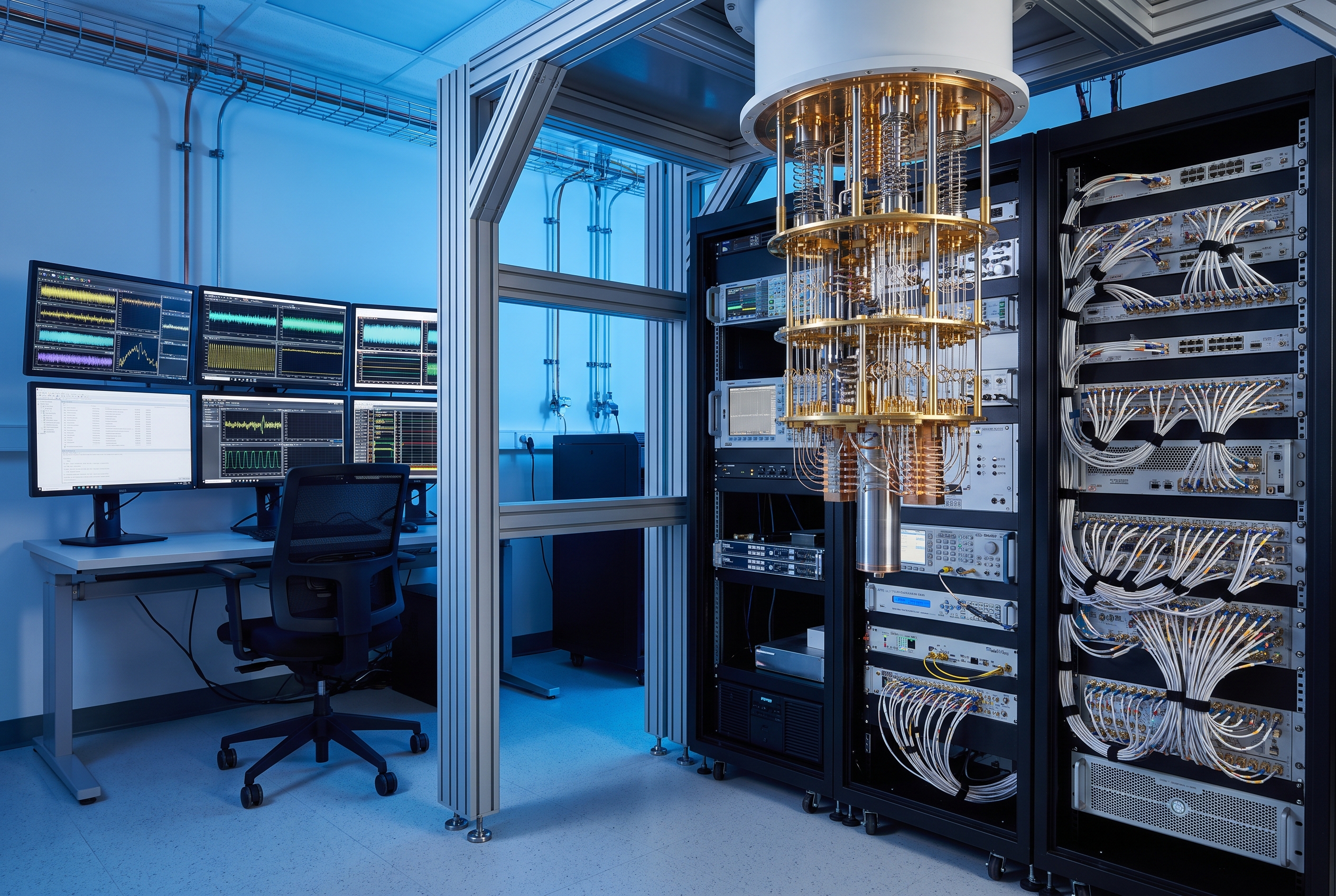
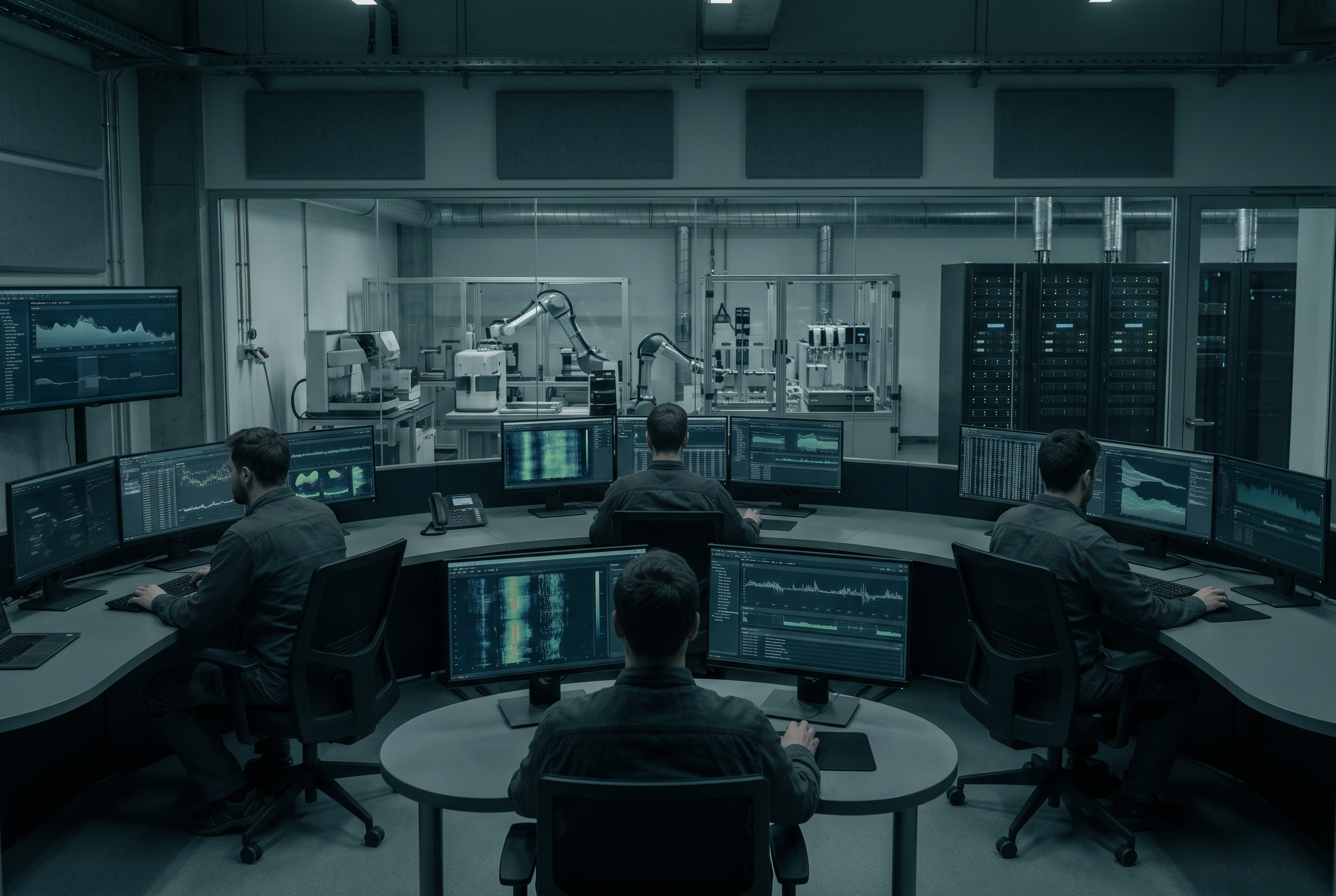
A laboratory agent does not need unrestricted control to be useful. In the quantum-chip example, the valuable work sits between loading a device into a dilution refrigerator and receiving calibration data that a researcher can interpret. The loop is repetitive but coupled: select a measurement, set parameters, collect a trace, judge signal quality, and either continue or flag an exception. Each stage produces state that the next stage depends on.
That makes the system closer to site reliability engineering than to a chatbot. The model provides planning and interpretation. Deterministic services should still validate inputs, enforce allowed parameter ranges, queue instrument access, store artifacts, and reject unsafe operations. A run should have a job ID, a versioned procedure, an operator identity, timestamps, tool-call inputs, raw outputs, and a final disposition. Without that record, a plausible answer can hide a bad action.
OpenAI says it spent more than 700,000 A100-equivalent GPU hours on automated red teaming for universal jailbreaks during the GPT-5.6 preview. That is a useful reminder for builders: model safety is a layer, not the whole control plane. The launch also describes real-time classifiers, account-level signals, differentiated access, and human review. Infrastructure teams should mirror the pattern with their own policy engine, credentials, network boundaries, and review path.
Why retries need semantics
Retry logic cannot be generic when hardware is involved. A failed HTTP request may mean the command never reached an instrument, or it may mean the instrument completed the action but the acknowledgment was lost. An agent needs idempotency keys and an explicit state read before replaying any action that changes equipment or production infrastructure. The same rule applies to a model-driven remediation job that restarts a service, rotates a credential, or changes a deployment.
What developers and infrastructure teams need to build
First, keep the model outside the trust boundary for direct control. Give it narrow tools such as start_measurement, read_trace, and request_review, rather than a broad shell or unrestricted instrument API. Put schemas around every argument. A frequency range, power limit, timeout, and maximum retry count should be validated by code before a command reaches the device.
Second, separate planning from execution. A high-reasoning pass can propose a sequence, but a smaller deterministic service should compile that proposal into approved tool calls. This reduces the chance that long context, a malformed result, or a prompt injection in a log becomes an action. It also gives teams a clean point to test procedures without invoking the model.
Third, treat context as data with a retention policy. Sol supports image analysis, which makes it useful for screenshots, plots, instrument panels, and visual QA. Those files can also contain sensitive research data, customer details, or secrets displayed in a terminal. Redact credentials before attachment, restrict retrieval to the current job, and preserve only the artifacts needed for audit and reproducibility.
Practical AI research automation rules
- Start with a stable procedure. Automate calibration or triage steps that already have known inputs, exit criteria, and an expert escalation owner.
- Use a finite action set. Each tool should do one thing, return structured output, and reject values outside its contract.
- Make stop conditions first-class. Define when a run pauses: low confidence, conflicting readings, a missing artifact, a limit breach, or a non-idempotent failure.
- Measure the whole loop. Track model latency, tool latency, retry rate, human overrides, failed validations, and time from anomaly to escalation.
- Test replay and recovery. Re-run recorded jobs against a simulator before permitting new tool versions or prompt changes in production.
There is also a capacity question. Long-horizon agents do not consume inference like one-off chats. They create bursts of reasoning, tool calls, retrieval, image inputs, and stored artifacts. Queueing and backpressure matter. A lab with ten instruments can create more concurrent state than a single assistant session, while a shared model endpoint can add variable latency. Runbooks need a fallback mode that returns control to a human when inference, tools, or the data store are unavailable.
Where Sol fits and where it does not
GPT-5.6 Sol on Wiro is suited to reasoning-heavy workflows that combine detailed instructions with optional image analysis. It should not be the only authority for destructive changes, scientific conclusions, or security decisions. OpenAI itself describes safeguards that can slow or block some requests in sensitive domains. Build for that behavior. A safe workflow records the refusal or delay, presents the evidence, and routes the job to a qualified reviewer instead of trying to work around the control.
The shift is simple: judge AI research automation by operations metrics, not demo fluency. Can a team reproduce the run? Can it explain every tool call? Can it stop safely? Can an engineer recover from a partial failure? Those questions decide whether a capable model becomes useful infrastructure. Run and scale controlled, observable model workflows on Wiro.