Controlled AI video generation is shifting from a novelty budget to an infrastructure budget. P-Video 2 brings text-to-video, image-to-video, and audio-conditioned generation into one short-form pipeline, with 5, 10, 15, and 20 second clips; 720p or 1080p output; and 24 or 48 frames per second. Those look like creative settings. For a team shipping product clips, onboarding videos, or localized ads, they are also capacity, review, and storage decisions.
Controlled AI video generation needs explicit control inputs
A prompt alone does not make a repeatable shot. P-Video 2 accepts a start image, an optional last-frame image, an audio track, duration, resolution, aspect ratio, frame rate, a draft switch, and a seed. Each input narrows the space that a generation job has to explore. That matters when a creative brief must survive handoffs between a designer, a reviewer, and an automated render queue.
Start and end frames are useful for more than style matching. They define boundaries for a transition. Audio conditioning gives a production system a concrete clip-length rule: the model trims audio that runs past the selected duration, while short audio produces a shorter video. A fixed seed also gives operators a cleaner experiment: change camera motion while holding the scene and seed steady, instead of comparing two runs with several hidden variables.
The model page lists seven text-to-video aspect ratios, from 16:9 through 9:16 and 1:1. That avoids a common operational mistake: rendering a landscape master and treating a crop as a vertical creative. A 9:16 shot needs its own subject placement, camera movement, and safe areas.
The render plan has real numbers behind it
Frame rate multiplies the amount of motion a reviewer must inspect. A five-second clip at 24 FPS contains 120 displayed frames. The same clip at 48 FPS contains 240. At 10 seconds, those counts become 240 and 480. More frames can make movement read more smoothly, but they do not fix an unstable subject, a bad camera instruction, or a weak source image.
Pruna documents a clear draft-to-final cost ladder for P-Video: 720p draft at $0.005 per output second, 720p final at $0.02, 1080p draft at $0.01, and 1080p final at $0.04. That means a five-second 720p draft has a documented reference cost of $0.025, while a five-second 1080p final is $0.20. A 20-second 1080p final reaches $0.80. Those figures are provider documentation, not a promise of platform pricing, but they show why every prompt should not enter the expensive lane.
| Stage | Suggested settings | What to judge |
|---|---|---|
| Exploration | 5 sec, 720p, 24 FPS, draft on | Composition, motion direction, prompt fit |
| Selection | Same seed, one variable changed | Whether the improvement is real |
| Delivery | 1080p, 48 FPS only when needed, draft off | Artifacts, subject stability, usable edit points |
That staged approach has a second benefit: it reduces queue noise. Infrastructure teams can label jobs as preview or delivery, set separate concurrency limits, and track promotion rate. If only one in ten drafts becomes a final, the primary optimization is not shaving milliseconds from every final render. It is preventing nine unnecessary finals.
Two short P-Video 2 tests show the staging model
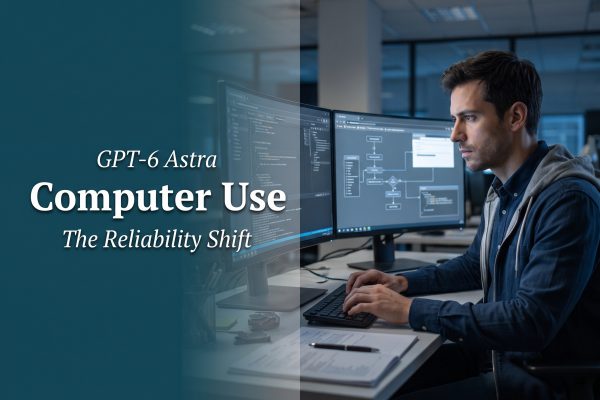
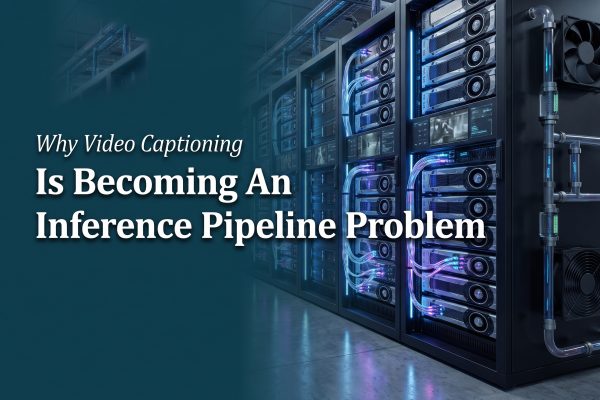
The first run uses a five-second, 720p, 24 FPS draft of an engineer moving through a GPU aisle. It tests slow forward camera motion, repeating rack geometry, and small details such as LEDs and fiber. It is a useful preview case because the team can reject a bad composition before committing to a higher-resolution render.
The second run moves to a five-second, 1080p, 48 FPS final-style setting. It tests a constrained lateral move, a human subject, an accelerator rack, and a storyboard transition in the same shot. That is harder than a static product loop because the model must preserve both the subject and the visual relationship between foreground and background.
Neither clip should be mistaken for a benchmark. Two examples cannot establish latency, throughput, or quality across prompt classes. They do show the practical distinction between a cheap motion check and a delivery candidate. That distinction is where controlled AI video generation starts to behave like a system rather than a slot machine.
What developers and infrastructure teams should measure
Track a request from prompt version to approved asset. Store the model name, seed, input asset hashes, requested resolution, FPS, duration, draft flag, elapsed time, and reviewer outcome. Without those fields, a team cannot explain why one render succeeded, reproduce a clip, or learn which controls earn their cost.
Four metrics work well in an early dashboard. First, measure completion rate by prompt class. Second, record median and p95 render time separately for draft and final jobs. Third, measure promotion rate: drafts that become finals divided by all drafts. Fourth, measure reuse rate: finals that actually reach an edit, campaign, or product surface. A low reuse rate usually points to the brief, review workflow, or shot design before it points to GPUs.
Use a small job schema too. A request needs an immutable prompt version and asset references. A render service should return the output URL plus the effective settings. A reviewer should approve, reject, or request a bounded change. This creates an audit trail without forcing a team to treat every generated clip as precious.
Limits worth planning for before production
P-Video 2 does not output 4K. The Wiro listing also warns that extreme camera moves and complex multi-scene stories are poor fits for one clip. Break a narrative into short shots, then edit the approved clips together. Low-quality, compressed, or dark input images can reduce stability and cause identity drift, so image-to-video pipelines need input validation before jobs enter the queue.
Audio-conditioned output has its own boundary. The listing notes that results can degrade with more than two distinct speakers and that speaker attribution may drift in longer dialogue. Treat generated dialogue as a review-required element, particularly for brand, legal, or accessibility-sensitive content. Keep safety controls enabled unless a documented moderation system owns the decision.
Pruna’s P-Video documentation details the draft cost tiers and prompt structure, while the P-Video 2 model page documents the available duration, resolution, frame-rate, start-frame, end-frame, and audio controls. The infrastructure lesson is simple: pay for controlled iteration first, then spend delivery budget on shots that survived review.
Run P-Video 2 on Wiro and scale controlled AI video generation on Wiro when the workflow needs repeatable motion, inspectable settings, and a deliberate path from draft to final.