Long-context AI agents turn model context from a convenience into a system design variable. GPT-6 Astra supports a 1,050,000-token context window and up to 128,000 output tokens, while accepting image input and making tool calls. That gives an agent room to reason over a large codebase, a document set, screenshots, and its own tool history. It does not remove the need to engineer memory well.
Long-context AI agents need a context budget
A million tokens sounds like permission to attach everything. It is not. A token window is a capacity limit shared by task instructions, source files, tool schemas, tool outputs, prior turns, images, and the answer. Once a team treats that capacity as free storage, the important constraint gets buried under old logs and duplicated documents.
GPT-6 Astra’s Wiro listing describes it as a reasoning model for coding, research, document work, structured output, and tool calls. The listing also says image input is supported, but audio and video are not. That distinction matters: a product team can keep a UI screenshot beside a bug report and the relevant source excerpt, yet it should transcribe a call or extract video frames before sending that evidence into the task.
Long-context AI agents work best when context has layers. Put the current objective, acceptance tests, and non-negotiable constraints in a small stable header. Retrieve the few source passages that answer the current question. Keep a compact decision record for facts already verified. Store raw logs and large artifacts outside the prompt, with durable references that the agent can retrieve when needed. This makes a large window a safety margin rather than a dumping ground.
What changes in agent architecture
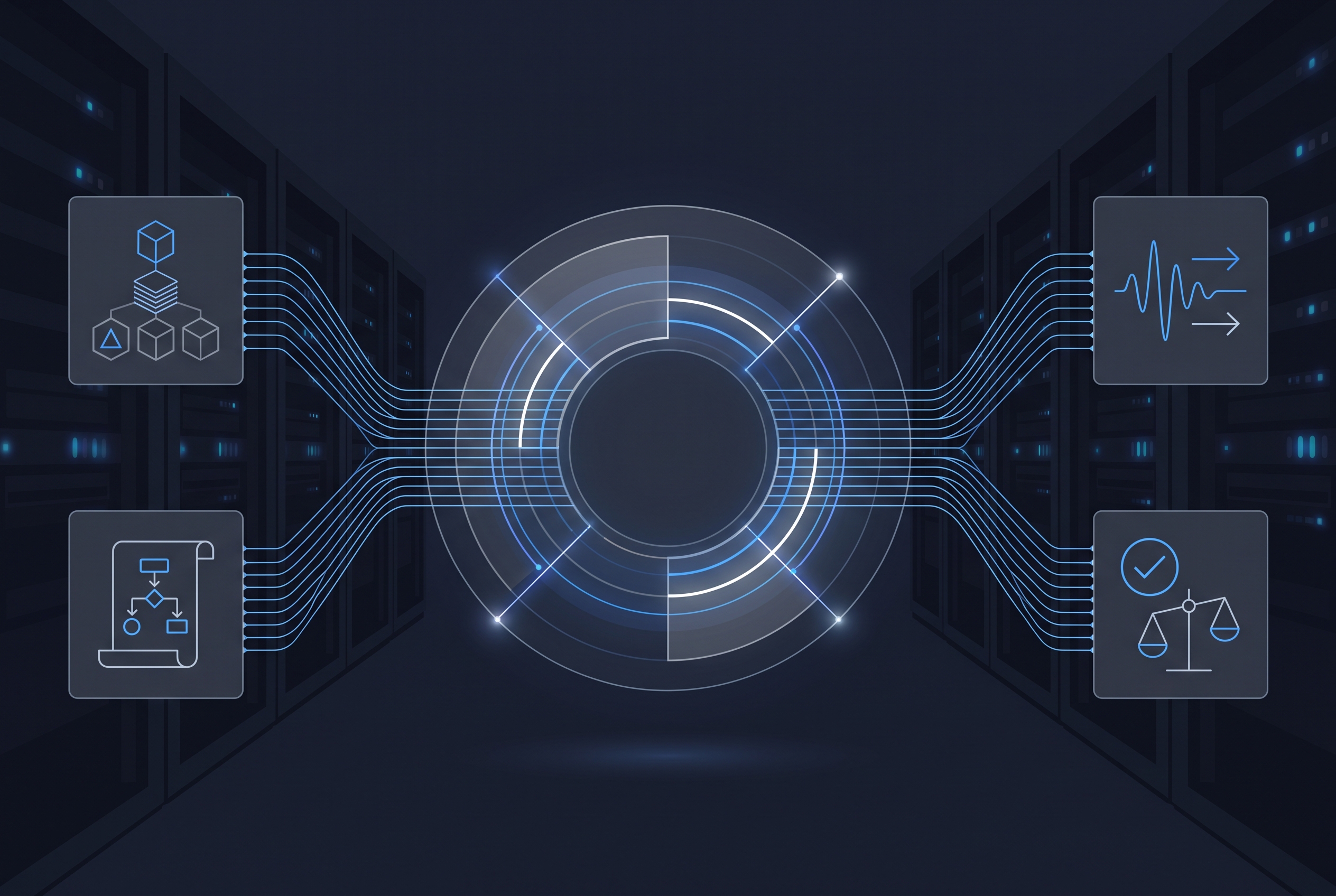
Traditional retrieval-augmented generation often starts each turn with a narrow search result. That pattern still has value. It reduces prompt size, enforces access boundaries, and gives engineers a clear provenance trail. Long context changes the threshold for when retrieval becomes a forced compromise. A complex refactor can carry the affected modules, test failures, architecture notes, and recent decisions together instead of repeatedly compressing them into one brittle summary.
OpenAI describes an Astra feature in Codex that preserves notes across filled context windows and leaves earlier windows searchable. The practical lesson is broader than one product: summaries should be pointers and decisions, not a lossy replacement for evidence. Keep the failing command, test output, file revision, and owner decision addressable. Let the agent retrieve the original item before it acts.
Tool calling also moves closer to the center of the design. A useful loop has four explicit stages: plan, call a bounded tool, validate the returned evidence, then update the task state. Do not let a final natural-language answer stand in for validation. For a code agent, validation might mean a targeted test result and a diff review. For a research agent, it might mean a source URL, a date, and a quoted fact. For an operations agent, it should include the exact external effect and whether a retry occurred.
That loop needs typed tool contracts. Keep arguments narrow, return machine-readable fields, and place authority checks outside the model. A broad shell or database tool turns a context problem into an access-control problem. GPT-6 Astra can choose and sequence tools, but the surrounding service must still enforce credentials, allowlists, rate limits, and approval boundaries.
Long context shifts the performance conversation
Long-context AI agents do not make latency disappear. More input changes the amount of work before a model emits its first useful token, and tool calls add queueing and network time. OpenAI reports that Astra scored 72.6% on OSWorld 2.0 in a latency simulation at roughly 40 minutes per task, compared with 65.7% at roughly 75 minutes for GPT-5.6 Sol. That is a useful directional result, not a service-level objective for every deployment. Local retrieval, tool reliability, and output verification can dominate end-to-end time.
Infrastructure teams should track cost per successful task rather than only tokens per request. A 700,000-token investigation that resolves a production incident can be cheaper than five short agent runs that each miss a dependency and send an engineer back to the beginning. The opposite is also true: including an entire monorepo for a one-line configuration change burns context without increasing task quality.
Measure at least five values for every meaningful run: input tokens, output tokens, retrieved artifact count, tool-call count, and task outcome. Add wall-clock latency and retry count when the agent touches external systems. Segment those measurements by task class. An incident triage agent, a pull-request reviewer, and a document extraction worker have different success definitions and context profiles.
Operational controls for long-context AI agents
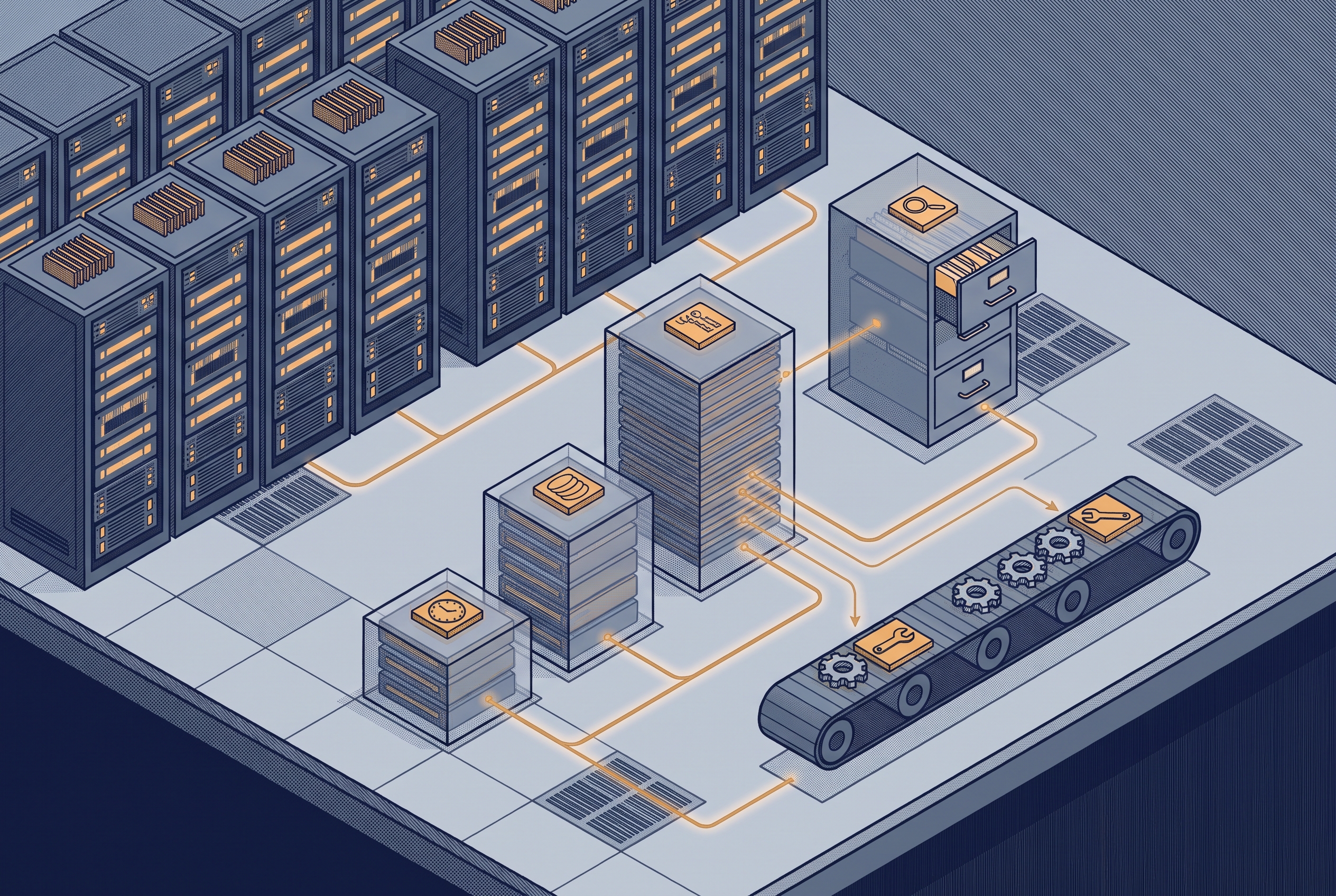
Start with a context ledger. Every agent run should record why each large artifact entered the prompt, its approximate token cost, its source, and its retention policy. That catches accidental prompt growth early. It also makes it easier to remove stale material after an incident or policy change.
Use checkpoints at real decision boundaries. A checkpoint is not just a summary. It should include the current goal, completed actions, evidence links, unresolved risks, and the next allowed tool actions. Long-context AI agents can then resume without replaying an entire conversation or trusting a free-form recap.
Run evaluation at two levels. First, test individual model behavior with fixed tasks: can it extract a required field, identify a failing test, or avoid a prohibited action? Second, test the full harness: retrieval quality, tool schema errors, permissions, retries, and observability. OpenAI’s system card notes that Astra deployment includes monitoring of tool-using inference and that monitoring has compute cost. The same trade-off applies to a production agent stack. Logging and review consume resources, but invisible failures cost more.
Security deserves a separate boundary. Context often contains the most sensitive material in a workflow: source code, ticket history, customer documents, or prior tool output. Apply document-level access checks before retrieval, redact secrets before prompt assembly, and pass only the authority needed for the next action. Large windows increase the chance that an irrelevant secret remains nearby when a model makes a tool call.
Practical takeaways
- Use the 1,050,000-token window for tasks that genuinely require connected evidence, not as a replacement for retrieval.
- Keep raw artifacts retrievable; store concise decision records in the active prompt.
- Give every tool a typed contract, bounded permissions, and a validation step.
- Monitor task success, context size, tool retries, latency, and cost together.
- Test the model and the agent harness separately before widening access.
GPT-6 Astra makes long-running, evidence-heavy work more practical, especially when code, documents, screenshots, and controlled tools need to stay connected. The infrastructure win comes from disciplined context assembly and measurable execution, not from filling the whole window. Run GPT-6 Astra on Wiro and scale agent experiments on Wiro.
Sources: OpenAI GPT-6 Astra announcement; OpenAI developer guidance on skills and prompts; GPT-6 Astra system card.