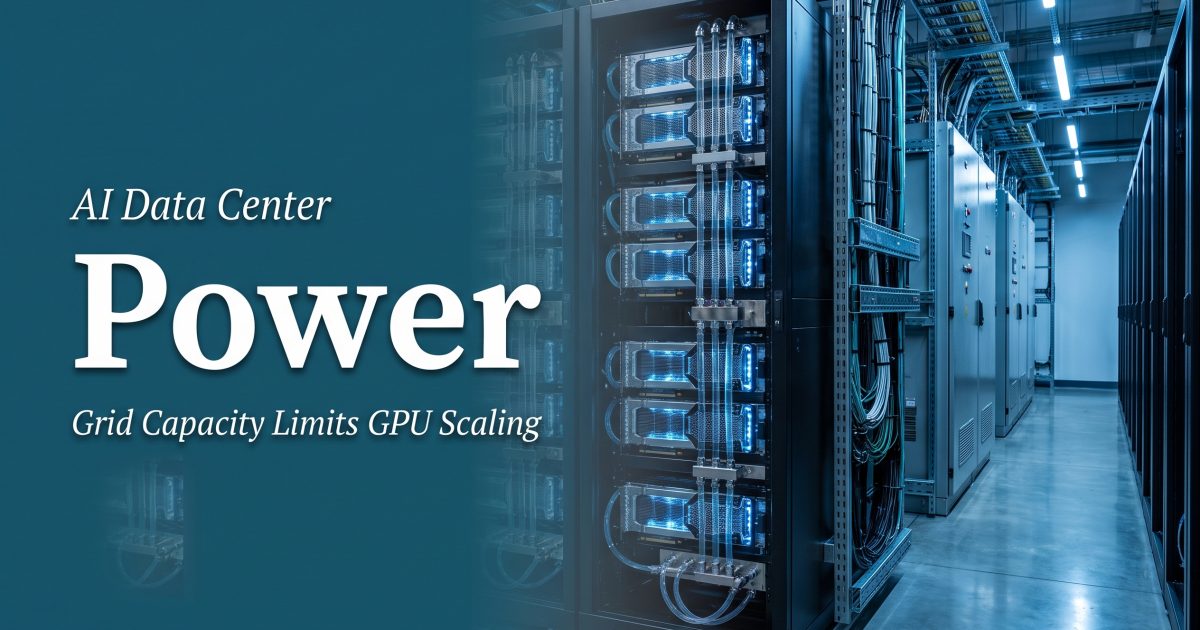
AI data center power now sets a hard boundary on GPU scaling. Buying accelerators is only one part of the build. A cluster also needs a utility interconnect, transformers, switchgear, UPS capacity, cooling plant, and enough generation behind the meter to serve its peak load. Those pieces often move slower than a GPU order. For developers, that changes how model choice, batching, routing, and latency targets should be designed.
AI data center power now determines the schedule
The scale of the demand is easy to miss when looking only at server counts. The Lawrence Berkeley National Laboratory estimates that U.S. data centers used 176 TWh in 2023, or about 4.4% of U.S. electricity. Its 2028 range is 325 to 580 TWh, equal to 6.7% to 12% of national electricity use. That is not a marginal facilities issue. It is a planning constraint with consequences for product roadmaps.
The International Energy Agency reaches a similar conclusion at the global level. Its Energy and AI analysis projects data-center electricity consumption will more than double to roughly 945 TWh by 2030. Local grids will feel the impact unevenly. A region with spare transmission and generation can support a new campus sooner than an already-constrained load pocket, even if both sites have similar land and fiber.
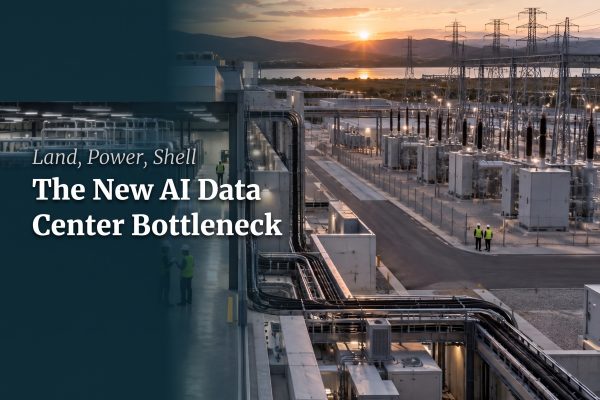
That creates a mismatch between compute procurement and electrical delivery. A hyperscale deployment may specify GPUs today, but a new substation, transmission upgrade, or interconnection study can take years. The limiting resource is therefore not only accelerator supply. It is firm megawatts at the exact place and time the service needs them.
GPU racks change the facility
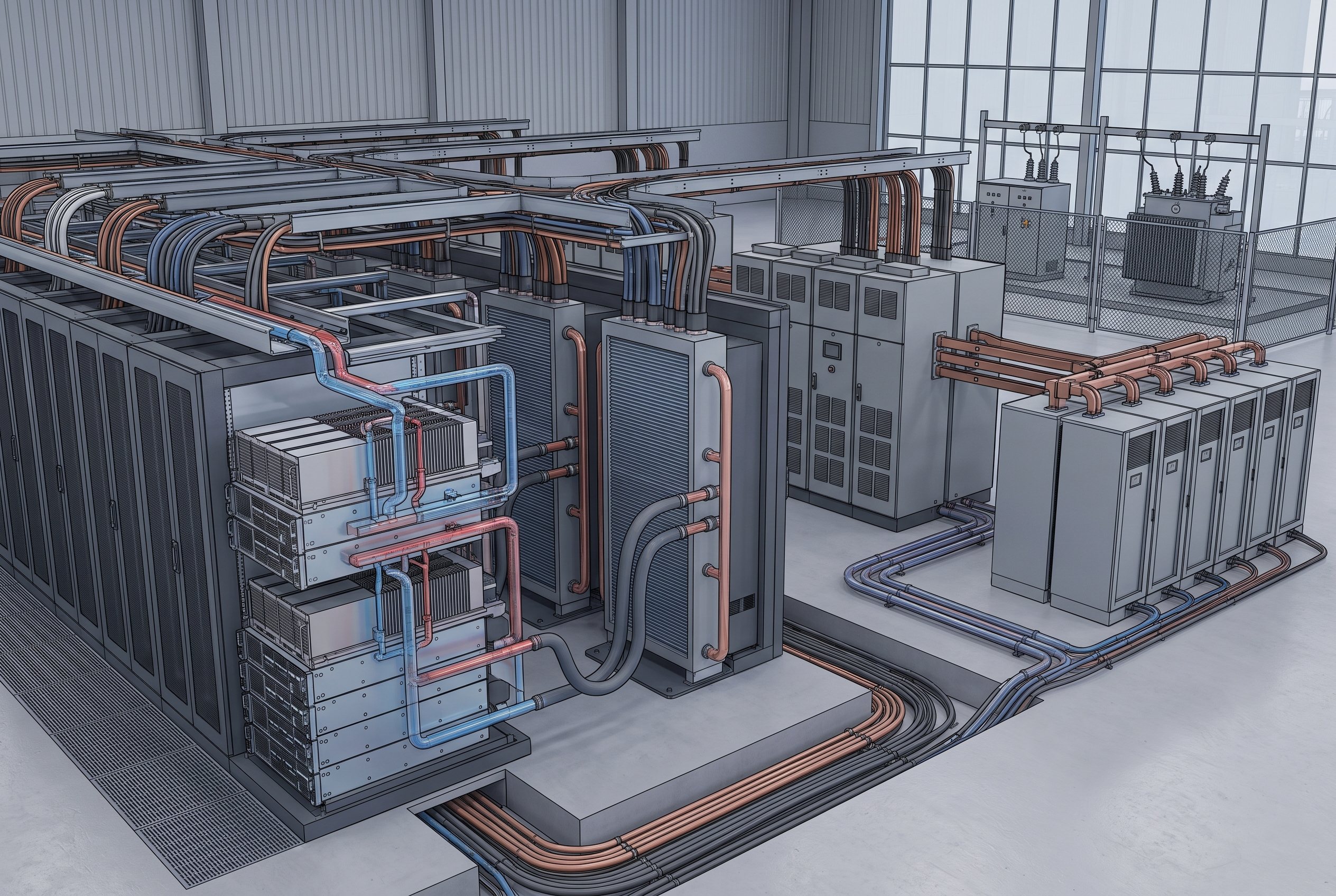
Traditional enterprise racks were often planned around single-digit kilowatts. AI training and high-throughput inference push far beyond that. The important number is not a marketing claim about a rack. It is the complete electrical path: utility feed, medium-voltage gear, transformer capacity, low-voltage distribution, UPS losses, and cooling load.
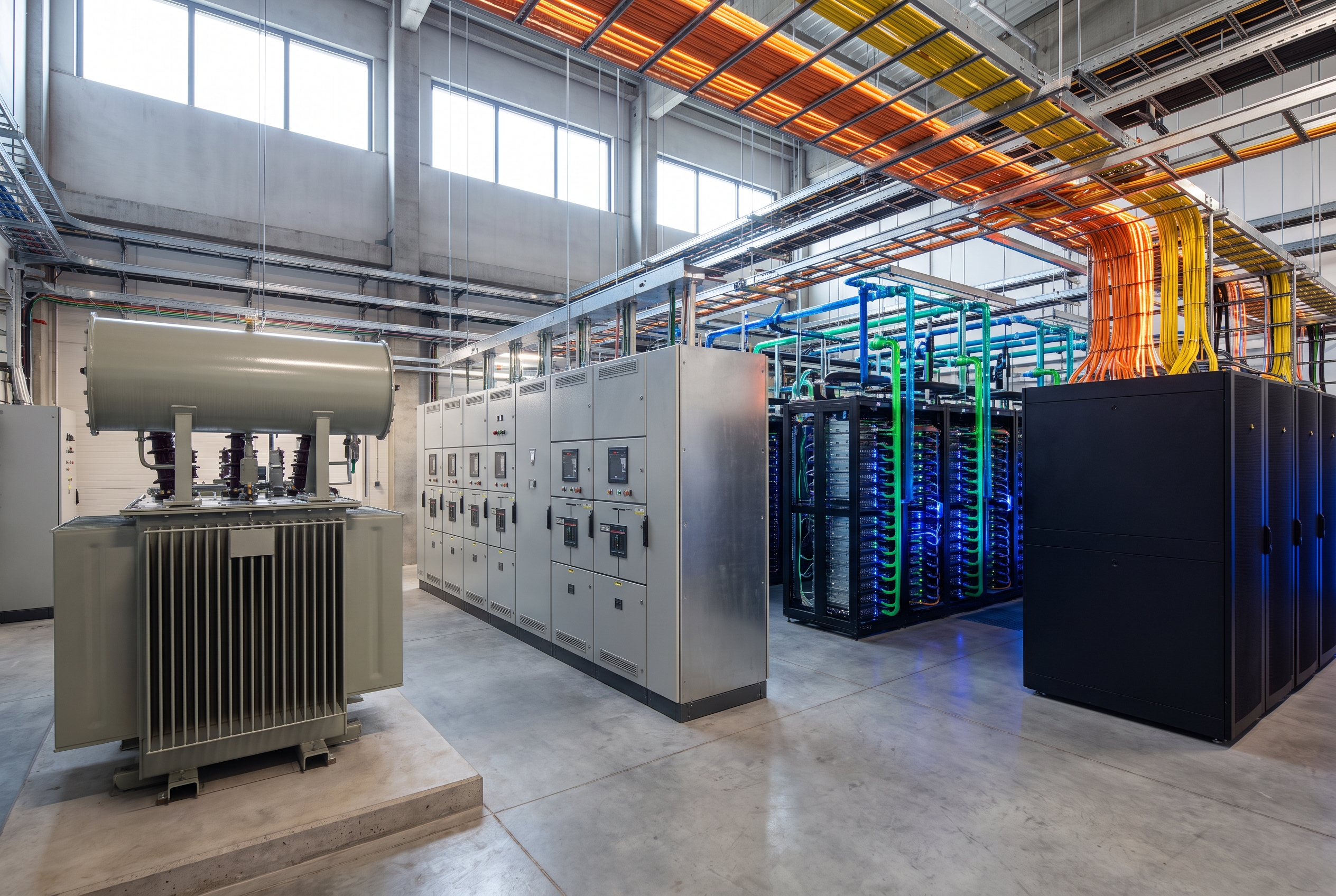
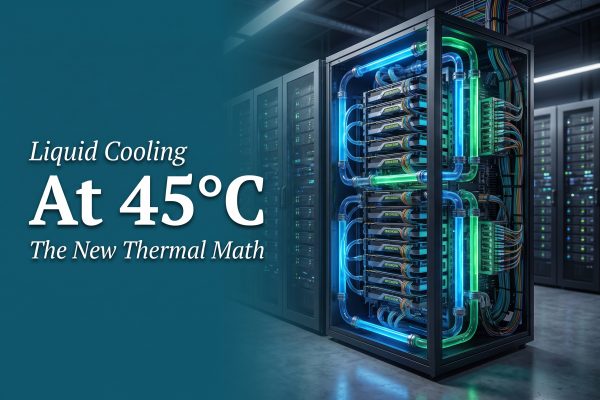
Higher rack density also makes heat removal part of the power budget. A GPU converts almost all of its electrical input into heat. Air cooling can work at moderate density, but dense deployments increasingly use direct-to-chip liquid loops, rear-door heat exchangers, or other liquid-assisted designs. Pumps, heat rejection, water treatment, and controls add load. The best design question is not how many kilowatts reach the GPUs. It is how many useful tokens, images, or training steps the facility delivers per megawatt drawn at the utility meter.
Power usage effectiveness, or PUE, still matters because it measures total facility energy divided by IT energy. A PUE of 1.20 means every 1 MW of IT load needs about 1.20 MW at the facility boundary. But PUE alone cannot justify an AI build. It does not show GPU utilization, model quality, queue delay, or how much capacity sits idle during off-peak demand.
Measure completed work per megawatt
Infrastructure teams need a metric that connects application behavior to electrical capacity. Start with completed work per megawatt under a stated service-level objective. For an LLM endpoint, track accepted requests, input and output tokens, p50 and p95 latency, queue time, GPU-hours, and facility energy. For image or video generation, use completed renders at a defined resolution and quality setting. Keep the quality setting fixed when comparing models, quantization levels, or hardware.
This framing exposes waste that a fleet dashboard can hide. A service with high average GPU utilization may still burn capacity on repeated context processing, poorly batched short requests, retry storms, or a model that is oversized for the task. Prefix and context caching can avoid recomputing stable prompts. Dynamic batching can lift throughput, though it must stay inside the latency budget. Routing simple jobs to a smaller model frees scarce high-end capacity for work that genuinely needs it.
Batching also has an electrical shape. At low traffic, aggressive batching can add queue delay without much energy gain. At high traffic, it can increase useful work per GPU and postpone a capacity expansion. Teams should test this with production-like prompt lengths and output distributions. A benchmark based on short, uniform prompts says little about an agent workflow that carries long histories and bursty tool calls.
Why developers should care about AI data center power
Application architecture now affects site selection and capital planning. A developer who reduces average output tokens by 20%, reuses a large prompt prefix, or shifts low-risk tasks to a smaller model can lower the number of active GPUs needed to hit the same latency target. That does not just trim a cloud bill. In a constrained region, it can reduce the electrical capacity a deployment must reserve.
Reliability planning belongs in the same conversation. Grid capacity is not binary. A site may have an interconnection agreement but still face curtailment risk, transformer maintenance windows, or demand charges that alter the economics of a peak. The U.S. Department of Energy points to onsite generation, storage, flexible loads, retired energy sites, and improved rate structures as options for meeting data-center demand. Those choices affect operational policy: which workloads can defer, which can shed, and which must remain online.
Inference services should therefore define workload classes. Put interactive requests with tight p95 latency on the firmest capacity. Run embeddings, fine-tuning, evaluation, and backfills where scheduling can follow lower-cost or lower-carbon windows. Capacity-aware queues make this explicit instead of letting batch jobs compete silently with customer traffic.
Practical checklist for infrastructure teams
- Model peak and average load separately. A 10 MW average does not prove that a 10 MW interconnect is enough.
- Ask the utility for the interconnection path, upgrade dependencies, and delivery milestones before committing to a GPU deployment plan.
- Budget for cooling, conversion, and resiliency losses, not only accelerator nameplate power.
- Measure requests or tokens completed per megawatt at fixed quality and latency targets.
- Test batching, caching, quantization, and routing with realistic traffic traces before adding capacity.
- Separate interruptible batch work from latency-sensitive serving, then define what can move during a power event.
AI data center power will remain a systems problem. GPU availability matters, but useful capacity comes from the whole chain: grid connection, electrical distribution, heat rejection, serving software, and workload policy. Teams that instrument that chain can make smaller, faster decisions before a power constraint turns into a multi-year delay. Run and scale models with Wiro.