
Stripe OpenRouter acquisition is less interesting as a corporate-news item than as an infrastructure signal. Seven weeks after Stripe said it had agreed to acquire OpenRouter, the important point is where the deal places model routing: next to usage metering, billing, and settlement rather than behind an application team as a convenience layer.
This is Verihex’s reading of the deal, not a claim about undisclosed Stripe plans. Stripe said OpenRouter routes and optimizes token usage across 400+ models from more than 80 providers, choosing against task complexity, price, speed, and reliability. Stripe also said it had launched Token Billing to help businesses optimize token costs and routing. Put together, those statements describe a familiar infrastructure boundary: one control plane observes usage, chooses a supplier, records consumption, and turns it into a bill.
Contents
- What the Stripe OpenRouter acquisition puts in one stack
- What changes for model API buyers
- Wiro test: why the spread makes routing valuable
- A gateway is becoming a financial boundary
What the Stripe OpenRouter acquisition puts in one stack
OpenRouter is a model gateway. It gives a developer one API layer that can send a request to different underlying model providers. Stripe’s announcement describes the selection criteria plainly: task complexity, price, speed, and reliability. That is a procurement and operations decision on every request, not only a developer-experience feature.
For a team calling one model directly, the cost path is simple: send a request, receive an output, pay one supplier. Multi-model production changes the job. A service may need to choose a model, recover from a failure, attribute spend to a customer or feature, reconcile usage records, and set a margin on top. Routing data and billing data start describing the same event.
Stripe already has products around usage-based billing. Its announcement specifically names Token Billing. Separately, Stripe’s Agentic Commerce Suite announcement shows the company building payment primitives for software agents: a single integration for selling across supported agents and Shared Payment Tokens for scoped payment access. That product is about commerce, not buying model calls. Still, it makes the acquisition easier to read. Stripe is assembling systems for programmable activity where software chooses, consumes, and settles.
The machine-native-economy framing comes from BlackRock Digital Assets Research as background context. This post takes only its infrastructure question: what happens when compute purchasing becomes more programmable? It does not use the report’s figures or make a market claim.
What changes for teams that buy model APIs
The first change is administrative. A gateway can turn several provider relationships into one usage record and one bill. That can reduce invoice reconciliation, but it also moves more operational history into the gateway: prompts, request metadata, model choices, retries, and cost allocation. Teams should decide what they retain, what they export, and what they can audit before treating the gateway as invisible plumbing.
The second change is price visibility. A router makes the model choice explicit. If the same job can complete on several models, the team can set a ceiling, a preferred latency class, and a fallback. The useful unit is not a model’s headline price. It is the cost and completion behavior for the actual workload.
The third change is control. Routing becomes a cost lever when an application can assign a default model, a premium path, and a retry path. That does not mean every request should chase the cheapest provider. A failed request, an unavailable model, or a slow queue can cost more than the saved cents. The operating policy needs limits for spend, latency, and failure handling.
There is also dependence. One gateway can simplify procurement while becoming a new point of concentration. Teams should keep provider identifiers in logs, test direct-provider fallbacks where the architecture allows, and understand how a gateway behaves during an upstream outage. A single bill is useful. A single opaque control point is not.
Wiro test: why the spread makes routing valuable
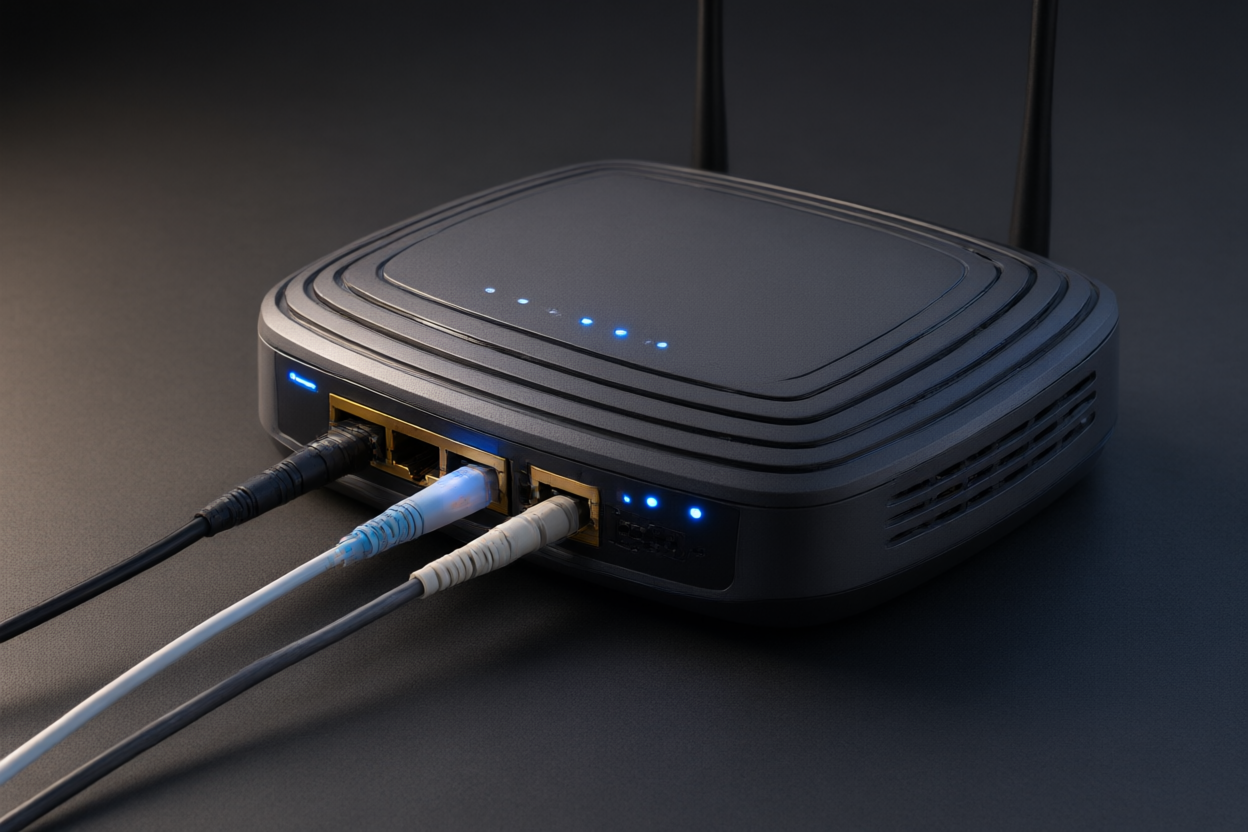
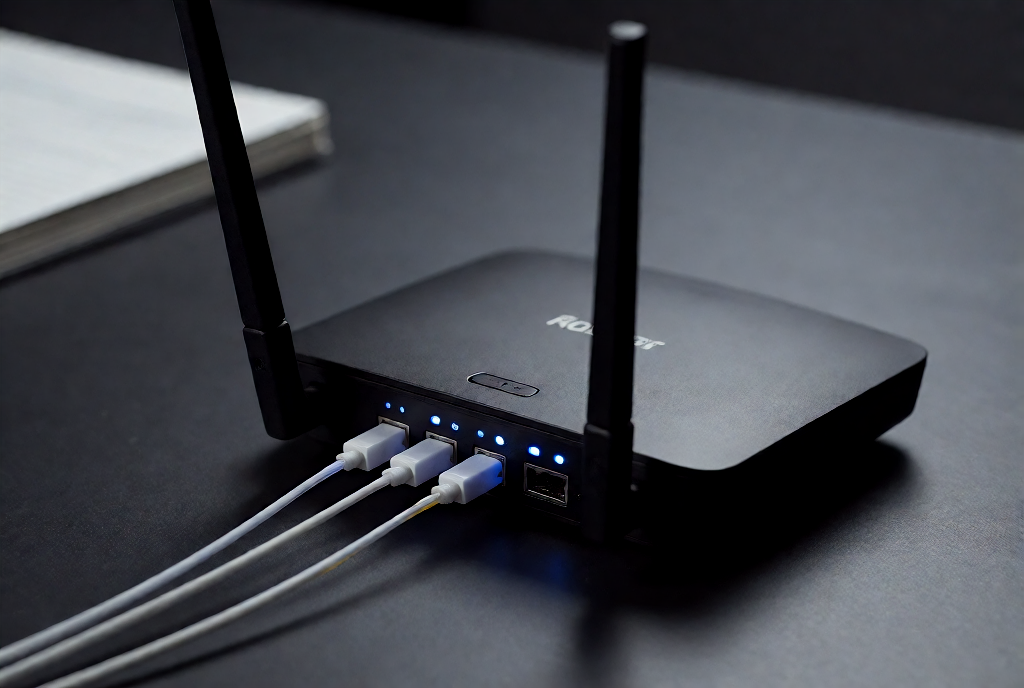
A small controlled run illustrates the economic part of that decision. Three public text-to-image models on Wiro received the same product-photo prompt at 1K and 3:2: a compact wireless router on a charcoal desk, with fiber cables, blue status lights, commercial lighting, and no text or logos. Each model ran three times. This is a routing measurement, not a quality ranking.
| Model | Runs | Billed cost per output | Median run time | Slowest run | Failures |
|---|---|---|---|---|---|
| Qwen Image 3.0 | 3 | $0.04 | 11 s | 13 s | 0 |
| Qwen Image 3.0 Pro | 3 | about $0.0136 | 14 s | 15 s | 0 |
| Z Image Pro | 3 | $0.02 | 20 s | 23 s | 0 |
All nine requests completed. The cheapest run here, Qwen Image 3.0 Pro at about $0.013, is not the fastest: Qwen Image 3.0 standard had an 11-second median run time at roughly three times the billed cost. The billed cost differs from the list price, which is exactly why routing needs measured receipts rather than headline prices.
That is the commercial logic behind a router. It earns its place by turning provider choice into a policy that can be observed and billed. The next step for a production team is to instrument elapsed time at the caller, add success criteria, and decide which jobs may use a lower-cost fallback. That is the evidence a router needs; image aesthetics are beside the point here.
A gateway is becoming a financial boundary
The acquisition does not prove that all compute buying will move through payment companies. It does show why payments infrastructure wants a view of model routing. Every model request can carry metering, a supplier decision, usage attribution, and a settlement event. The boundary between inference control planes and billing systems is getting thinner.
For teams buying model APIs, the practical response is unglamorous: treat routing policy, provider observability, usage records, and fallback behavior as one operating system. Keep the choice reversible. Measure the work that matters. Then use Wiro to run and scale the models that fit the workload.
Primary source: Stripe agrees to acquire OpenRouter to help businesses optimize token routing and usage.